POLIBA MASTER'S DEGREES | ELECTRICAL ENGINEERING
Master's Degree Course in Electrical Engineering | Polytechnic University of Bari
Overview
The Degree Course in Electrical Engineering of the Polytechnic University of Bari aims to provide engineering skills in the fields of design, planning and management of systems for the production, transmission and distribution of electrical energy, as well as its efficient and technologically advanced use.
The development of modern society is based on the availability of energy in forms suitable for being easily transformed into light, heat, motive power, electromagnetic waves for the transmission and processing of information, and chemical actions. electrical energy constitutes the most efficient means of conversion from other primary forms of energy and of long-distance transmission.
These characteristics make electrical energy irreplaceable in multiple applications in every daily activity, whether domestic, industrial or service-related. Electricity emerges as a critical energy carrier and an extraordinary opportunity to drive the transition to clean energy and to the energy decarbonization as there will be a tendency to use electrical energy for services that currently do not use it (electrification).
Electrification can bring a series of benefits ranging from affordability and security of supply to increased energy efficiency, improved air quality in cities, and “customer empowerment” through greater flexibility and sector coupling thanks to digitalization. In this context, the role of the electrical engineer will play a key part.
POLIBA MASTER'S DEGREES | ELECTRICAL ENGINEERING
Educational Objectives
The Master's Degree Course in Electrical Engineering is the natural continuation of the three-year degree course in Electrical Engineering, but it may also be chosen starting from a three-year degree in the industrial, information, or civil and environmental sectors.
Duration
Language
Admission
POLIBA MASTER'S DEGREES | ELECTRICAL ENGINEERING
Skills and curricula
The programme includes a common core and three curricula:
- E-TRANSITION E-MOBILITY
- ELECTRICAL INFRASTRUCTURES AND SMART GRID
- ADVANCED AND SUSTAINABLE DESIGN OF ELECTRICAL SYSTEMS
The course aims to provide solid specialized engineering skills aimed at:
- solving Electrical Engineering problems, including highly complex ones, both of a traditional nature and in new and emerging topics and areas;
- the design of complex and/or innovative electrical systems, of a civil and/or industrial type;
- in the fields of transmission and distribution of electrical energy, automation industrial, building automation and mobility;
- the design of electrical machinery, electrical drives and electronic systems of complex and/or innovative power for industrial automation, building automation and robotics;
- the design and management of electrical energy production plants from traditional and renewable sources, as well as storage systems and their integration into smart grids;
- the management of complex and/or innovative systems, processes and services within industrial settings and large civil facilities;
- the planning, operation and control of electrical systems and complex installations;
- the study of the behavior of materials used in the field of Electrical Engineering;
- the design and management of the product, process and service quality system electrical.
EMPLOYMENT OUTCOMES
Professional opportunities
The typical professional profile of the graduate in Electrical Engineering consists of the engineer designer and/or manager of:
- systems for the production of electrical energy from renewable and conventional sources;
- electrical energy transmission and distribution systems;
- systems for the control of industrial processes;
- building automation systems;
- electrical equipment and machines;
- electrical systems for mobility;
- smart grids and energy communities.
EMPLOYMENT TYPES
- public and private companies;
- manufacturing industries;
- standardization and control bodies;
- research and/or training institutes and centers;
- self-employment;
- engineering companies.
SECTORS
- Industrial Energy;
- Renewable sources;
- Environmental.
POLIBA MASTER'S DEGREES | ELECTRICAL ENGINEERING
Subsequent Training
The Master's Degree in Electrical Engineering gives access to the third level of University education (PhD Program), to Specialization Courses and Second-level University Master's Programs.
CONTACTS

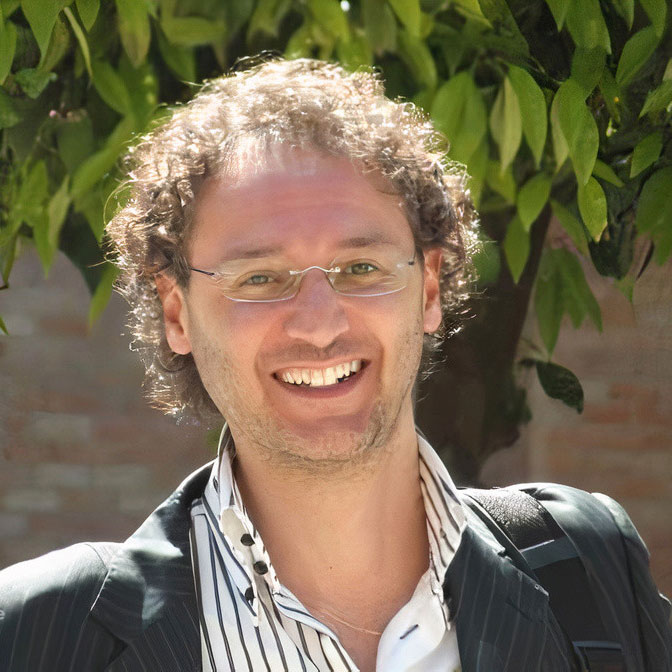
Prof. Silvano Vergura
Coordinator of the Degree Course
Orientation Office
Service of the Polytechnic of Bari
POLIBA MASTER'S DEGREES
LINKS AND USEFUL DOCUMENTS
- TEACHING REGULATIONS A.Y. 2026/2027
- TEACHING REGULATIONS A.Y. 2025/2026
- TEACHING REGULATIONS A.Y. 2024/2025
- TEACHING REGULATIONS A.Y. 2023/2024
- TEACHING REGULATIONS A.Y. 2022/2023
- TEACHING REGULATIONS A.Y. 2021/2022
- TEACHING REGULATIONS A.Y. 2020/2021
- TEACHING REGULATIONS A.Y. 2019/2020
- TEACHING REGULATIONS A.Y. 2018/2019
- TEACHING REGULATIONS A.Y. 2017/2018
- TEACHING REGULATIONS A.Y. 2016/2017
- TEACHING REGULATIONS A.Y. 2015/2016
- TEACHING REGULATIONS A.Y. 2014/2015
- TEACHING REGULATIONS A.Y. 2013/2014
- TEACHING REGULATIONS A.Y. 2012/2013
- ANNUAL CPDS REPORT - A.Y. 2024/2025
- ANNUAL CPDS REPORT - A.Y. 2023/2024
- ANNUAL CPDS REPORT - A.Y. 2022/2023
- ANNUAL CPDS REPORT - A.Y. 2021/2022
- ANNUAL CPDS REPORT - A.Y. 2020/2021
- ANNUAL CPDS REPORT - A.Y. 2019/2020
- ANNUAL CPDS REPORT - A.Y. 2018/2019
- ANNUAL CPDS REPORT - A.Y. 2017/2018
- ANNUAL CPDS REPORT - A.Y. 2016/2017
- ANNUAL CPDS REPORT - A.Y. 2015/2016
- Internal Annual Review Report 2026
- Annual Monitoring Report 31.12.2022
- Cyclical Review Report - 2021
- Annual Monitoring Form - 2020
- Annual Monitoring Form - 2019
- Internal Annual Review - 2019
- Annual Monitoring Form - 2018
- Internal Annual Review - 2018
- Annual Monitoring Form - 2017
- Annual Monitoring Form - 2016
- Interim Review - 2017
- Annual Review - 2015
- Cyclical Review - 2015
- Minutes of the GdR meeting of 06/12/2018
- Minutes of the GdR of 26/11/2018
- Minutes of the GdR meeting of 20/11/2018
- Minutes of the GdG of 02/05/2018
- Minutes of the GdR meeting of 11-12/01/2018
- Minutes of the GdR meeting of 14/12/2017
- Minutes of the GdR of 11/12/2017
- Minutes of the GdG of 27/03/2017
- Minutes of the GdG of 13/03/2017
- Minutes of the GdG of 21/07/2016
- Minutes of the Degree Programme Board of 15/02/2023
- Minutes of the Degree Program Board of 13/12/2022
- Minutes of the Degree Programme Board of 21/09/2022
- Minutes of the Degree Program of 06/04/2022
- Minutes of the Degree Programme Board of 08/02/2022
- Degree Program Minutes of 14/12/2021
- Minutes of the Degree Programme Board of 23/11/2021
- Minutes of the Degree Programme Board of 30/06/2020
- Minutes of the Degree Program of 06/02/2019
- Minutes of the Degree Program of 07/12/2018
- Minutes of the Degree Programme Board of 09/11/2018
- Minutes of the Degree Programme Board of 19/04/2018
- Minutes of the Degree Program of 01/03/2017
- Minutes of the Degree Programme Board of 22/02/2017
- Minutes of the Degree Program Board of 01/02/2017
- Minutes of the Degree Programme Board of 07/04/2016
